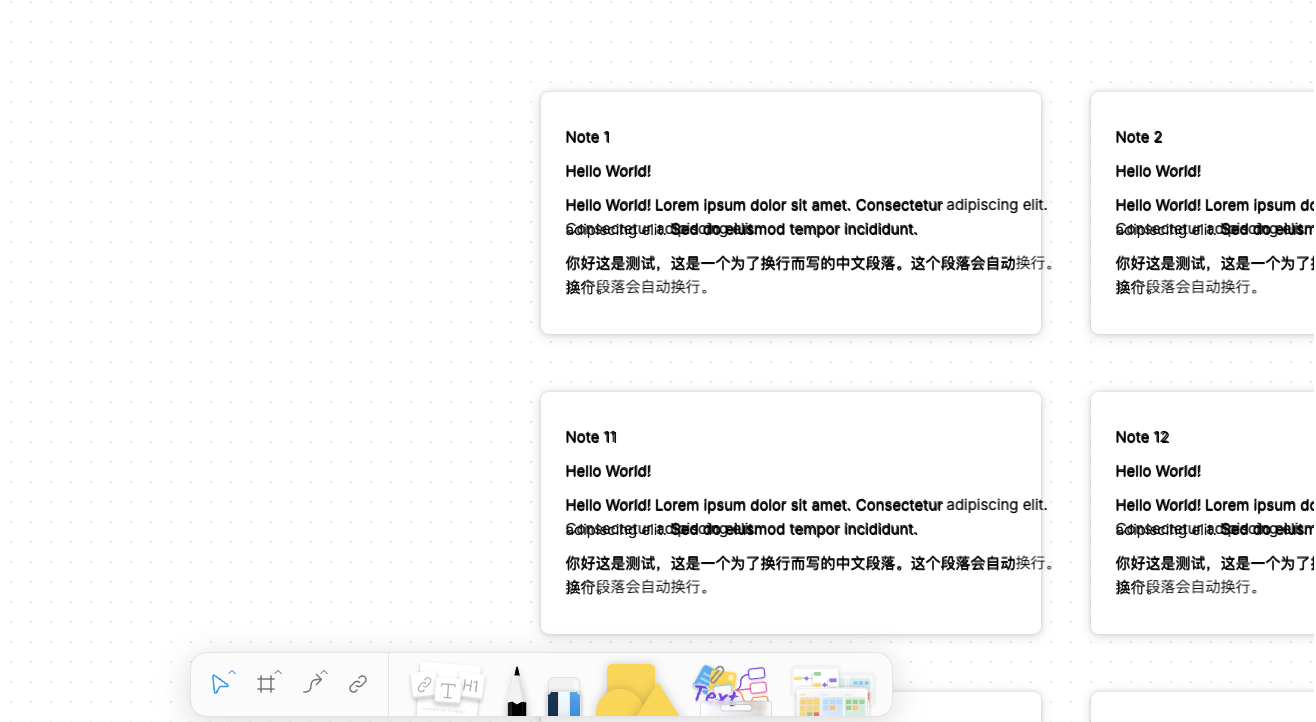
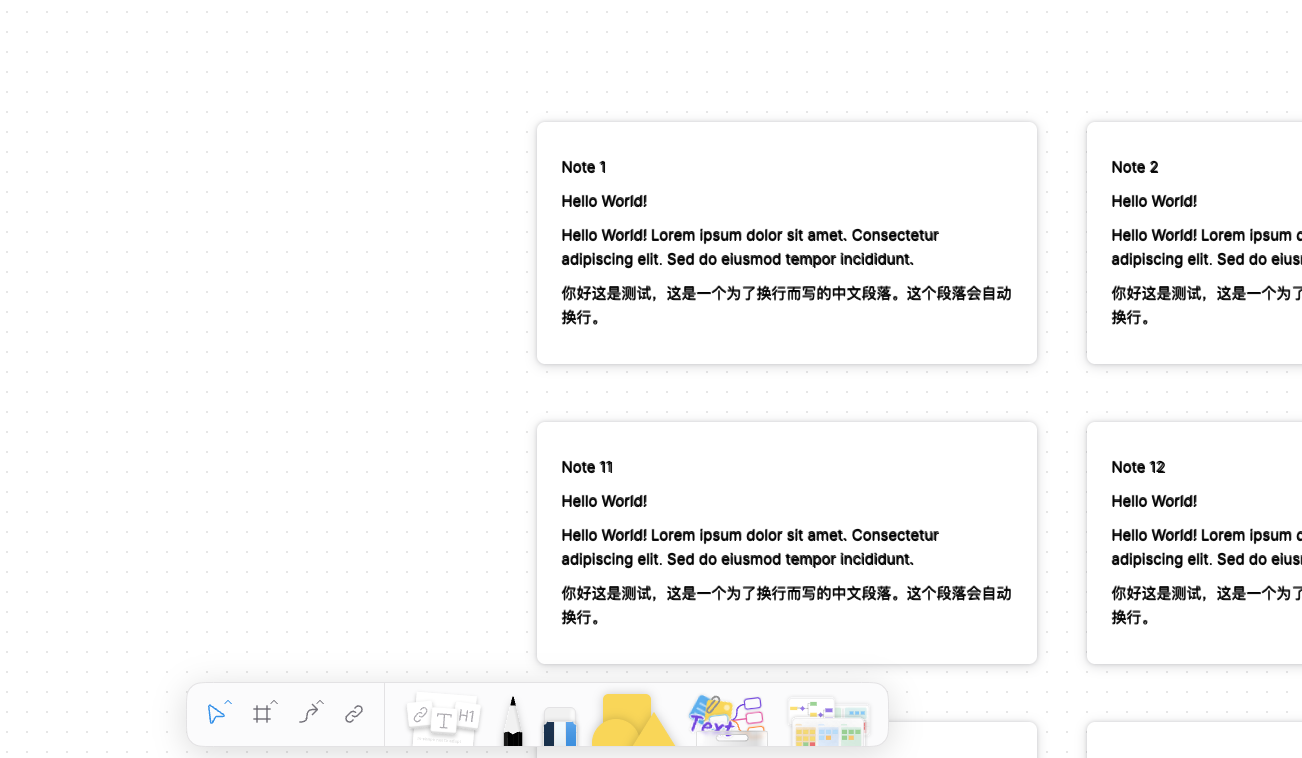
The `ViewportTurboRendererExtension` is now extracted from `@blocksuite/affine-shared` to `@blocksuite/affine-gfx-turbo-renderer` with minimal dependencies, mirroring the gfx text package in #10378.
Currently, `GfxViewportElement` hides DOM blocks outside the viewport using `display: none` to optimize performance. However, this approach presents two issues:
1. Even when hidden, all top-level blocks still undergo frequent CSS transform updates during viewport panning and zooming.
2. Hidden blocks cannot access DOM layout information, preventing `TurboRenderer` from updating the complete canvas bitmap.
To address this, this PR introduces a refactoring that divides all top-level edgeless blocks into two states: `idle` and `active`. The improvements are as follows:
1. Blocks outside the viewport are set to the `idle` state, meaning they no longer update their DOM during viewport panning or zooming. Only `active` blocks within the viewport are updated frame by frame.
2. For `idle` blocks, the hiding method switches from `display: none` to `visibility: hidden`, ensuring their layout information remains accessible to `TurboRenderer`.
[Screen Recording 2025-03-07 at 3.23.56 PM.mov <span class="graphite__hidden">(uploaded via Graphite)</span> <img class="graphite__hidden" src="https://app.graphite.dev/api/v1/graphite/video/thumbnail/lEGcysB4lFTEbCwZ8jMv/4bac640b-f5b6-4b0b-904d-5899f96cf375.mov" />](https://app.graphite.dev/media/video/lEGcysB4lFTEbCwZ8jMv/4bac640b-f5b6-4b0b-904d-5899f96cf375.mov)
While this minimizes DOM updates, it introduces a trade-off: `idle` blocks retain an outdated layout state. Since their positions are updated using a lazy update strategy, their layout state remains frozen at the moment they were last moved out of the viewport:
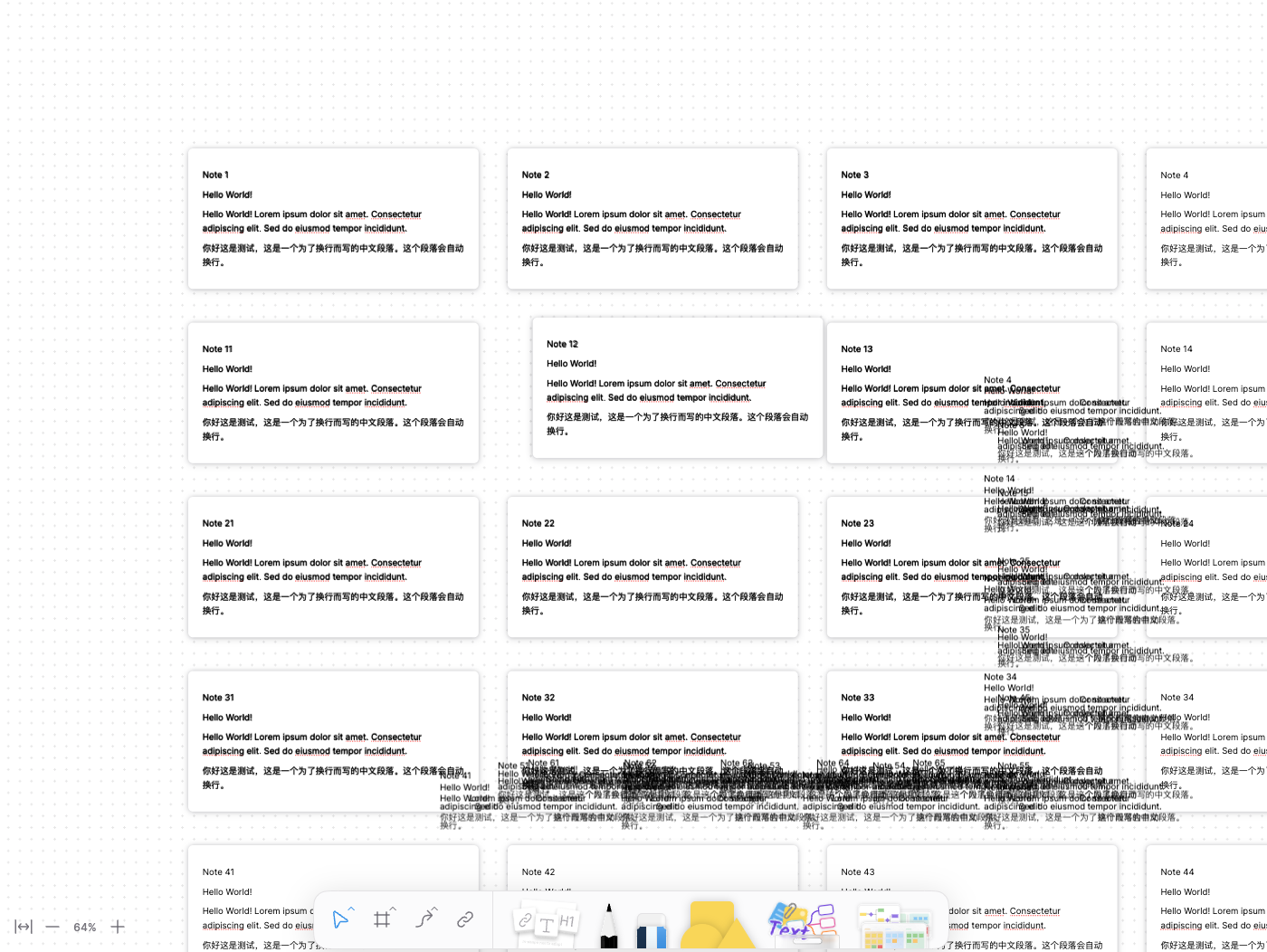
To resolve this, the PR serializes and stores the viewport field of the block at that moment on the `idle` block itself. This allows the correct layout, positioned in the model coordinate system, to be restored from the stored data.
This PR performs a significant architectural refactoring by extracting rich text functionality into a dedicated package. Here are the key changes:

1. **New Package Creation**
- Created a new package `@blocksuite/affine-rich-text` to house rich text related functionality
- Moved rich text components, utilities, and types from `@blocksuite/affine-components` to this new package

2. **Dependency Updates**
- Updated multiple block packages to include the new `@blocksuite/affine-rich-text` as a direct dependency:
  - block-callout
  - block-code
  - block-database
  - block-edgeless-text
  - block-embed
  - block-list
  - block-note
  - block-paragraph

3. **Import Path Updates**
- Refactored all imports that previously referenced rich text functionality from `@blocksuite/affine-components/rich-text` to now use `@blocksuite/affine-rich-text`
- Updated imports for components like:
  - DefaultInlineManagerExtension
  - RichText types and interfaces
  - Text manipulation utilities (focusTextModel, textKeymap, etc.)
  - Reference node components and providers

4. **Build Configuration Updates**
- Added references to the new rich text package in the `tsconfig.json` files of all affected packages
- Maintained workspace dependencies using the `workspace:*` version specifier

The primary motivation appears to be:
1. Better separation of concerns by isolating rich text functionality
2. Improved maintainability through more modular package structure
3. Clearer dependencies between packages
4. Potential for better tree-shaking and bundle optimization

This is primarily an architectural improvement that should make the codebase more maintainable and better organized.
 donteatfriedrice